

Contact
Email:
hundorova@gmail.com
Work group
Human Rights
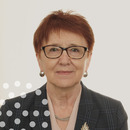
Tamara Hundorova is a Doctor of Science, Professor, and Principal Research Fellow at the Shevchenko Institute of Literature of the National Academy of Sciences of Ukraine, as well as an Associate of the Harvard Ukrainian Research Institute and a Dean of Ukrainian Free University.
She is the author of numerous books, including Transit Culture and Postcolonial Trauma (2025) and The Post-Chornobyl Library. The Ukrainian Postmodernism of the 1990s (2019). Dr. Hundorova is a Fulbright Scholar and a fellow of the Philipp Schwartz Initiative of the Humboldt Foundation and the Wissenschaftskolleg zu Berlin. She has lectured at Princeton University, Harvard University, Kyiv-Mohyla Academy University and the University of Toronto.
Her fields of study include modernism, postmodernism, gender, postcolonial studies, and the history of Ukrainian literature.
Research Project:
Post-Chornobyl memory in the transnational cultural context
From a historical perspective, the Chornobyl disaster gained transnational significance as a phenomenon of nuclear culture. It marked the beginning of an era of catastrophism, which Aleida Assmann refers to as the "era of interrupted time" and Paul Virilio as "catastrophic history." Chornobyl caused a "sociological shock" (Ulrich Beck), raising questions about human survival, the environment, ecology, and the nuclear threat.
The Chornobyl discourse lies at the intersection of various interpretations, cultural concepts, and geopolitical imaginations. While philosophers associate Chornobyl with the beginning of the "nuclear era," politicians associate it with the end of the Cold War and the collapse of the USSR. Chornobyl has become a crossroads of different memory models and reception paradigms—collective and individual, global and local, and national and transnational. Heroism and victimization, on the one hand, and catastrophism and touristification, on the other, define the shift in global collective memory surrounding Chornobyl.
This project aims to study post-Chornobyl memory as a transnational and transcultural phenomenon. Specifically, it examines local and global perceptions of the nuclear accident and the role of culture in developing different models of post-Chornobyl memory.